
Automate or Modernize?
Patching vs. Modernizing the Platform: the dilemma every organization faces
At WAU, we regularly work with organizations looking to make their operations more efficient. One question comes up in almost every case, in one form or another.
“Should we automate the tasks our current system doesn’t cover, or is it time to modernize everything from the ground up?”
It’s a fair question. Automating manual processes often looks like a simple, effective, and affordable fix. Behind that apparent simplicity is a decision that can have very different effects over the medium and long term.
Drawing on dozens of projects, I’ll share our perspective on when to automate, when to modernize, and how to take a hybrid approach while staying focused on your strategic goals.
Automating without modernizing is fast and has limits at scale
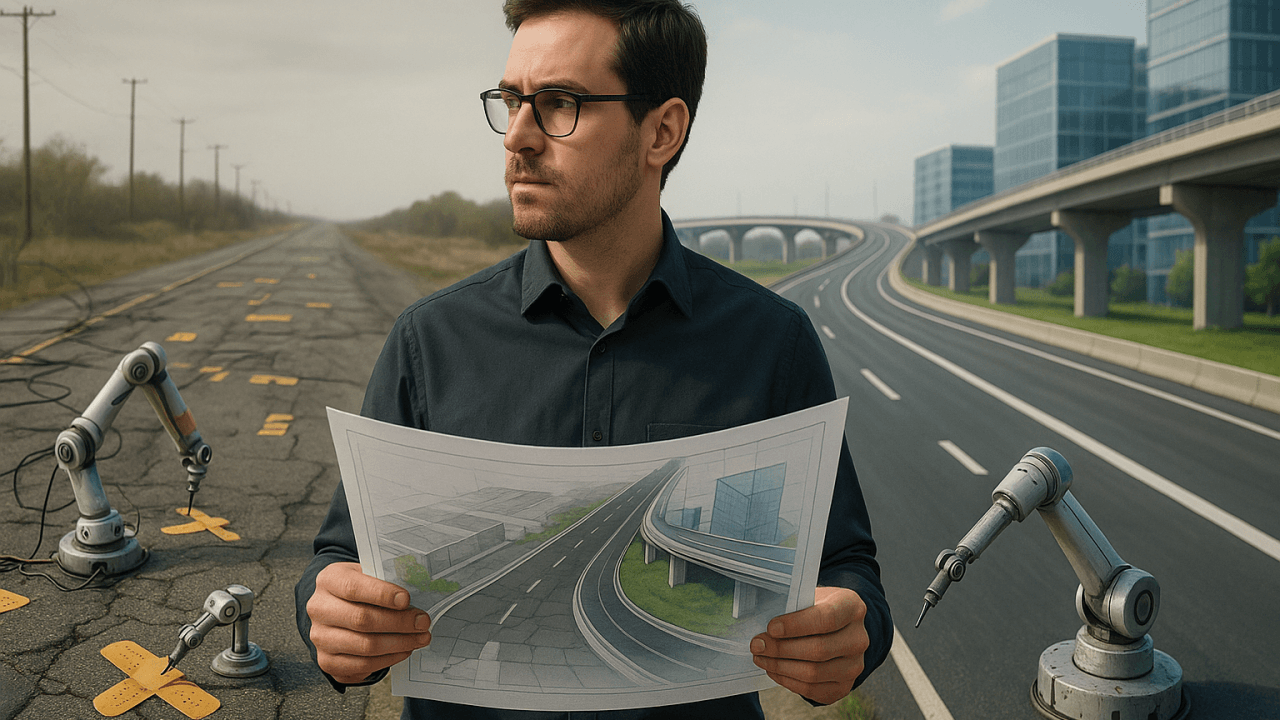
Automating manual tasks with bots (RPA), scripts, or digital assistants is like patching potholes on an old road. It works, traffic flows better, and everyone appreciates it. The road itself is still the same.
This approach offers clear benefits.
- Quick implementation (weeks or even days).
- Low upfront costs.
- Less human error and a lighter operational workload.
- No changes required to the source system, which is ideal for legacy systems.
At WAU, we’ve done this in many settings. We’ve built bots that interact with external platforms without APIs and automated tasks such as payment reconciliation, report extraction, and checks against entities such as SAT and Guatecompras.
As you add more automations, operations become more complex. If the underlying system stays the same, every new need calls for another patch. That architecture ages quickly.
Modernizing to build a foundation for the future
Modernization starts with rethinking how processes and systems should serve the actual needs of the business. It means updating the technology and building a flexible, scalable architecture that can support those needs in the future.
At WAU, our modernization work focuses on several practices.
- Decouple features to reduce tight dependencies.
- Build APIs for components currently locked in silos.
- Redesign processes by working backward from the customer journey.
- Adopt SecDevOps, CI/CD, observability, and technology governance practices.
It takes longer and costs more upfront. The return over the medium and long term is much greater.
- The system adapts easily to changes in the business.
- Innovation is easier when teams can work without fighting an outdated architecture.
- Maintenance costs fall. Documentation and traceability improve.
- Development teams can spend more time delivering value and less time putting out fires.
A side-by-side look at Automating vs. Modernizing
The hybrid approach when you can’t modernize everything today
Ideally, every system would be decoupled, with clean APIs and processes orchestrated in a modern architecture. In practice, that’s only possible in some cases.
Sometimes the core is off-limits. Sometimes there’s no budget. Sometimes the timing is simply wrong.
That’s why at WAU we take a hybrid approach. We automate where it makes tactical sense and keep our long-term goals in view. We can make progress on both fronts by automating while modernizing with a clear purpose.
How do we do it?
We identify the processes that would benefit most from automation. We choose carefully, leaving some tasks manual and deferring automation where it makes sense to wait.
We design automations we can maintain. Even for “temporary” solutions, we follow good practices, including documentation, orchestration, logging, and validation. Automation takes planning.
In parallel, we plan modernization module by module. In many cases, a bot that extracts data today can be replaced by a well-designed microservice tomorrow. We plan for that replacement from the start.
We educate teams about the cost of technical debt. Showing the real impact of continued patching helps teams make better decisions. Automation makes sense in some situations. Without a longer-term plan, it can get expensive.
What does this approach achieve?
- We make progress today while keeping our future options open.
- We automate deliberately.
- We build a technical foundation that can evolve.
- We connect day-to-day operations to a workable long-term strategy.
Conclusion: Automation gets you through today. Modernization takes you further.
Automation solves today’s problems.
Modernization builds for tomorrow.
Combining both strategically lets you make practical progress while keeping your long-term goals in sight.
At WAU, we take a pragmatic approach. We understand the constraints businesses face, and experience has taught us how costly repeated patching can be. That’s why we advocate for technology decisions that support the business as it evolves.
What matters is how the work changes the way the business operates, serves customers, and prepares for what’s ahead.
Where are you in the process?
Are you automating to get by? Or are you already thinking about how to modernize so you can grow in a structured, scalable way?
💬 I’d love to hear about your experience or read your questions in the comments.
