
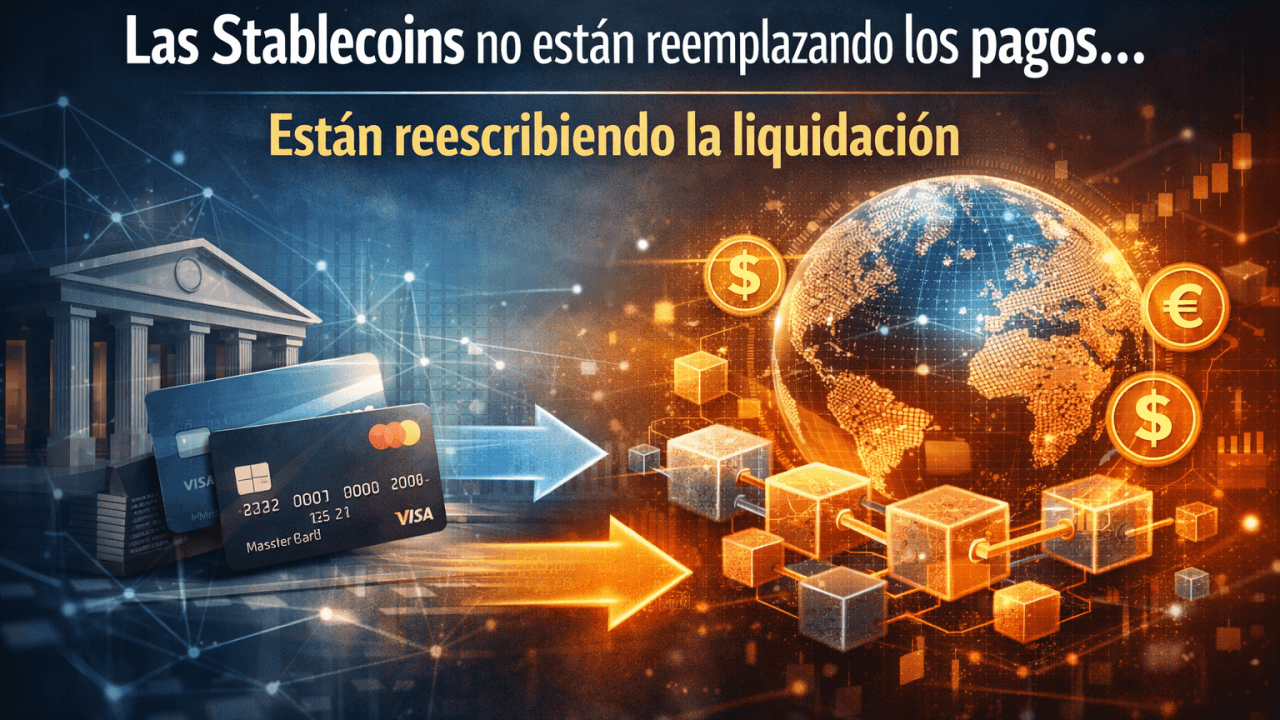
Stablecoins Aren’t Here to Replace Payments, but to Rewrite How Money Is Settled
At WAU, we have spent several years closely tracking the evolution of the payments ecosystem in Latin America and the opportunities that emerging technologies such as stablecoins offer. Speculation often dominates conversations about crypto assets. In our work with customers and partners, we have focused on understanding how these new systems can fit into traditional finance securely, strategically, and in line with regulation.
We’ve helped banks, fintechs, and large corporations explore real-time payment models, regional interoperability, and treasury optimization. That work has made it increasingly clear that stablecoins can address longstanding settlement problems, especially in B2B settings, treasury operations spanning multiple accounts, and cross-border flows.
For much of the past decade, stablecoins have been seen as a threat to banks, card networks, and traditional payment infrastructure. That view is outdated. Today, stablecoins are changing how settlement works within the broader payments system. Three forces are driving this shift: expectations of immediacy, pressure on balance sheets, and cross-border payment inefficiencies that traditional rails were never designed to address.
Stablecoins are emerging as a parallel settlement layer, particularly useful for cross-border, treasury, and B2B flows where speed, liquidity visibility, and foreign exchange efficiency matter more than the consumer checkout experience. The shift is already evident in how regulated institutions engage with stablecoins. They prioritize 100% redeemable, fiat-backed stablecoins with strong compliance controls and avoid speculative exposure. Their approach is pragmatic and aims to reduce friction while preserving trust.
One of the biggest changes is who leads the conversation. CFOs and treasury leaders now help set strategy alongside CIOs and payments teams. From their perspective, payments affect transaction costs, working capital, trapped liquidity, cash forecasting accuracy, and balance sheet efficiency. Alongside real-time payment rails, stablecoins can shorten settlement cycles and make liquidity more predictable and even programmable, directly affecting financial performance.
Card networks and bank rails are becoming more relevant as a result. Visa and Mastercard are taking on new roles. As settlement spreads across cards, account-to-account payments, real-time transfers, and stablecoins, value shifts toward orchestration, standards, identity, compliance, and intelligent routing. The future belongs to platforms that can choose the best rail in real time based on cost, speed, risk, foreign exchange, and liquidity.
In this model, stablecoins give organizations more ways to settle payments alongside cards. Cards will continue to dominate consumer checkout. A2A payments will be essential to domestic efficiency. Stablecoins will fill gaps in global, around-the-clock coverage that traditional rails leave open. The strategic value comes from connecting the rails so they work together.
Another often underestimated factor is the role of data and standards. Rich data made possible by ISO 20022 and modern messaging formats is now essential. Its quality directly affects reconciliation, fraud detection, automated compliance, and routing decisions. AI-driven optimization and real-time risk management both depend on consistent data across rails. Stablecoins, real-time payments, and richer messaging should be designed together as part of a unified architecture.
Success takes more than technology. The operating model is the most underestimated challenge. Real-time, around-the-clock settlement changes how institutions manage risk, treasury, compliance monitoring, and exception handling. Payments, treasury, and risk teams must work together. Institutions that treat stablecoins as a side experiment will fall behind. Those that design their target architectures and operating models with clear accountability, regulatory alignment, and ownership of ongoing operations will be able to scale.
Regulation is central to this work. Institutions moving ahead are doing so while some regulatory questions remain open. They’re building with “compliance by design,” integrating on-chain monitoring, wallet controls, sanctions screening, and auditability from the start. They treat stablecoins as regulated instruments under existing financial crime prevention and risk management frameworks. That distinction separates them from anonymous crypto assets.
Looking ahead, the institutions that succeed will move past false choices between fiat and stablecoins, banks and fintechs, or networks and blockchains. The reality is more nuanced. Stablecoins offer a practical settlement option without requiring a speculative bet on crypto. Combined with real-time rails, rich data, and artificial intelligence, they form part of a multirail payments strategy that aligns technology decisions with financial outcomes.
The future of payments spans multiple rails and technologies. It belongs to organizations that understand that efficient settlement, liquidity visibility, and financial intelligence come from orchestrating multiple infrastructures coherently and securely.
Conclusion
At WAU, we believe stablecoins, combined with real-time payments, rich data, and strong governance, represent one of the most transformative opportunities in the evolution of the financial system. Realizing that opportunity requires purposeful integration, design that accounts for regulation, and execution on a modern architecture.
That’s why we’re helping banks and other financial institutions integrate these new capabilities gradually and securely. The work ranges from decoupling core systems and modernizing architectures to adopting API-first models that support an open, interoperable environment built for real-time operations.
The conversation about stablecoins has moved from theory to strategy.
And the time to build is now.
