
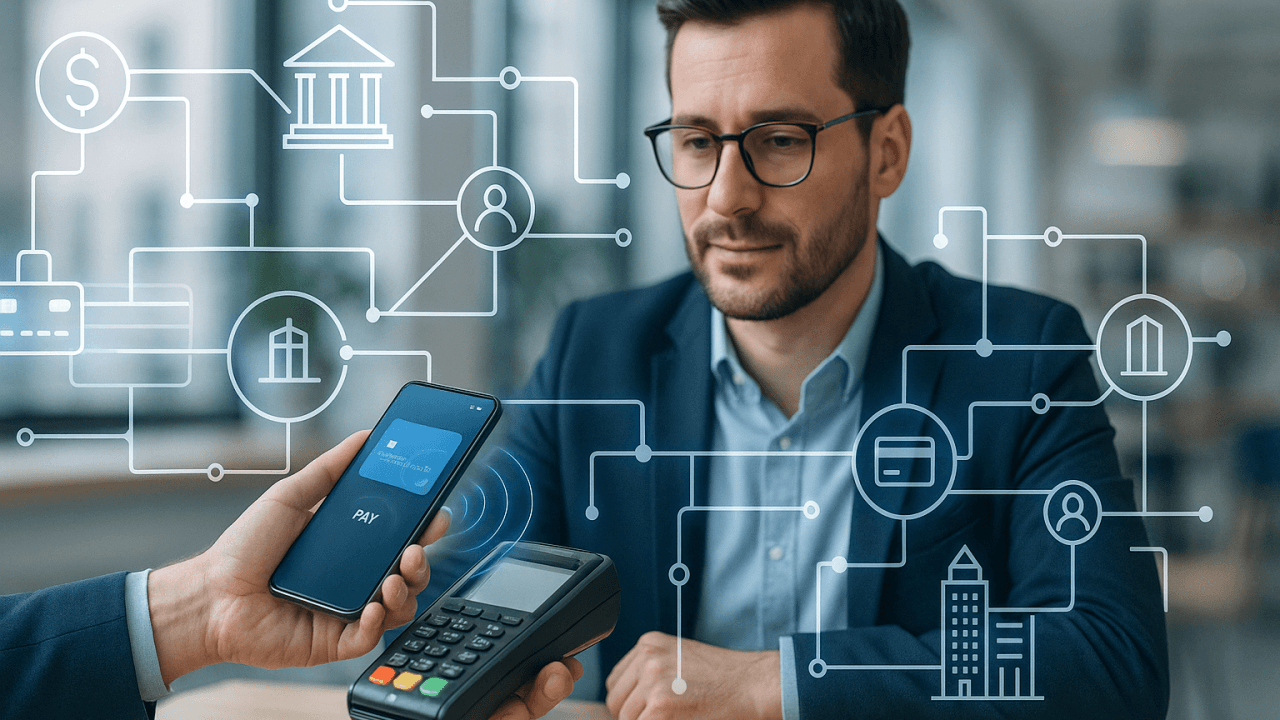
The Digital Wallet Revolution: Transforming Payments and Consumer Spending
The jingle of coins in a pants pocket and leather wallets are becoming things of the past. A more sophisticated, scalable way to pay is driving that shift. The digital wallet has grown from a fintech trend into an essential part of the new digital economy. It’s changing consumer behavior, reshaping commercial ecosystems, and pushing banks and payment service providers to rethink their roles.
This looks like a systemic shift in how people exchange value and manage their financial identities, on a scale that goes well beyond incremental change.
Modernizing banking infrastructure is essential to keeping pace. We’ve seen this at WAU as we help financial institutions transform their legacy systems. We make those systems more agile, secure, and interoperable so they can easily connect to wallets, open APIs, and new ways of interacting with customers digitally.
1. The “Frictionless Interaction” Imperative: why experience sets you apart
In a post-pandemic world where digital is the norm, a frictionless experience is essential.
· Speed drives conversion. Digital wallets remove physical and cognitive friction. Payment options ranging from biometrics and tap-and-go to invisible in-app payments cut checkout times and lift conversion rates.
· Less cart abandonment. Online merchants that integrate wallets such as Apple Pay or Google Pay see a notable increase in completed transactions.
· A strategic advantage in customer experience (CX). For issuers and merchants alike, enabling near-instant transactions builds loyalty and drives repeat business, which directly affects the ROI of digital channels.
“A high-friction experience is a technical problem that also holds back growth.”
2. Technology builds trust and removes a security barrier
Trust in new, advanced security protocols has overcome earlier skepticism about digital payments.
· Tokenization and biometrics. Single-use tokens, facial recognition, and hardware-level encryption are now standard. These measures make wallets even more secure than traditional cards.
· Less fraud. According to Mastercard, tokenized transactions see up to 50% less fraud than traditional card transactions.
· Greater consumer confidence. Stronger security builds trust in online shopping, particularly for high-value or international purchases.
Implications for financial institutions
At WAU, we’ve helped financial institutions move to more secure, adaptive architectures. They’ve added capabilities ranging from real-time analytics to API-first integrations, which let them respond quickly to today’s security and user experience challenges.
To stay competitive, banks need to build on static authentication with real-time risk analysis, behavioral biometrics, and API-first integrations.
3. Digital wallets as hubs for finance and commerce
Digital wallets are becoming platforms for managing personal finances and identity.
· Loyalty and identity. Products like Apple Wallet and Google Wallet bring together digital IDs, event tickets, insurance, and loyalty cards in one interface.
· Data-driven engagement. Every wallet interaction generates valuable data that can power hyperpersonalized offers, context-specific rewards, and finely targeted campaigns.
· Simpler digital identification. These wallets increasingly support frictionless onboarding (KYC-lite), storage for travel documents, and credential sharing.
“The wallet has gone from the end of the funnel to the start of the relationship.”
4. Visibility vs. Speed: financial awareness in the digital age
Digital payments make spending more transparent, though some gray areas remain.
· Spending insights. Many wallets already offer budgeting tools, smart categorization, and alerts that help people improve their financial literacy in real time.
· The “invisible money” problem. Digital interfaces can make money feel abstract and create a mental disconnect, which tends to increase impulse spending.
· Gamified finance. Fintechs are introducing goal-based savings, behavioral nudges, and spending-habit analytics to counter this effect.
An opportunity for the financial sector
Integrating personal financial management (PFM) tools into apps and mobile wallets offers a way to strengthen customer relationships.
5. Mobile-First Infrastructure for inclusion, innovation, and interoperability
The smartphone has become central to financial inclusion and fintech innovation.
· Outpacing legacy systems. In markets such as Kenya, India, and Brazil, wallets including M-Pesa, PhonePe, and PicPay are surpassing traditional banks in user numbers and transaction volume.
· Embedded finance ecosystems. Many wallets already offer loans, insurance, and buy now, pay later (BNPL) services, evolving into full-service financial platforms.
· Next-generation capabilities. Technologies such as NFC, QR codes, voice payments, and AI assistants are being developed for real-world use, pushing the limits of interaction design and transaction models.
Launching new apps can take you only so far. Getting there requires transforming the underlying technology. At WAU, we help refactor legacy platforms so they can run natively on mobile, work with digital wallets, and scale to support next-generation services such as BNPL and voice payments.
“The mobile wallet is now the internet’s financial identity layer.”
Challenges that remain
The industry has made real progress, and challenges remain.
· Interoperability. The lack of common standards across wallets and networks limits their ability to scale globally.
· Data governance. As wallets grow into data-rich ecosystems, compliance with rules such as GDPR, PSD3, and future AI laws is becoming more important.
· The digital divide. Financial inclusion is improving, though access to smart devices and digital literacy still vary widely.
Institutions that modernize their infrastructure and enable fast, secure integrations will be in the strongest position. WAU works closely with banks and fintechs to modernize their core systems so they can adapt to new ways of interacting digitally without rebuilding from scratch.
Conclusion: Finance is already being reshaped
Digital wallets are improving payments and reshaping the entire architecture of personal finance. From microtransactions in emerging markets to how Gen Z manages money, these products are at the center of the fintech revolution.
For financial institutions and fintechs
· It’s time to rethink wallets as platforms for engaging users beyond the payment itself.
· The focus should cover the value exchanged as well as the speed of the transaction.
· Above all, organizations across the payments chain will need to work together across competitive lines to keep the ecosystem resilient over the long term.
As value moves into mobile-native, data-driven environments built on trust, digital wallets are becoming the rails for digital life as well as the future of payments.
With experience, security, and interoperability shaping success, transformation has to reach deeper than the interface. The technology architecture itself has to evolve to support this new financial environment.
At WAU, we see system upgrades as part of preparing institutions to connect more easily, respond faster, and build digital trust at scale. That’s why we help banks, fintechs, and other companies across the financial ecosystem build more agile, open, and resilient infrastructure that can integrate with today’s wallets and tomorrow’s.
The digital wallet revolution is already underway. Is your technology ready to keep up?
